If you are in a Denver auto repair shop for a repair and you suspect that you are being overcharged for the labor, try calling several other shops to ask them for an estimate on the amount of time they have listed in their labor guide. Most service centers will be glad to help you because they have a chance of getting a new customer. Ask them for the amount of time for the repair you need and the name of the labor guide they are using. If the labor price you are being charged does not agree with the labor guide, stop the repair before it starts and ask the service manager how he determined the labor price. If he cannot offer a good explanation, get out of there.You are the one in control. Make sure to get the repairs you want and nothing more.
Showing posts with label car repair. Show all posts
Showing posts with label car repair. Show all posts
Thursday
How to Determine Auto Repair Labor Costs
If you are in a Denver auto repair shop for a repair and you suspect that you are being overcharged for the labor, try calling several other shops to ask them for an estimate on the amount of time they have listed in their labor guide. Most service centers will be glad to help you because they have a chance of getting a new customer. Ask them for the amount of time for the repair you need and the name of the labor guide they are using. If the labor price you are being charged does not agree with the labor guide, stop the repair before it starts and ask the service manager how he determined the labor price. If he cannot offer a good explanation, get out of there.You are the one in control. Make sure to get the repairs you want and nothing more.

Tuesday
Repairing Vehicle Axles

Monday
When to Have Your Brake Pads Inspected
Brake shoes are similar to brake pads and are designed to wear out. They are pressed against the inside of the brake drums to stop the car. Shoes are used only with drum brakes and are found only on the rear of modern cars. Many cars do not use drum brakes at all; these cars have disk brakes on the front and the rear. There are two brake shoes per rear wheel.
 Any time the tires are off the car or whenever you hear or feel anything strange from your brakes, your brakes should be inspected. The best time is when you are having the tires rotated, which should be about every 5-7 thousand miles. This relatively short interval almost always allows you to catch the pads before they wear out completely. Even if the shop that does your tire rotation does not repair brakes, someone there can probably tell you approximately how much life is left on them. Simply ask them to look at your brakes while the wheels are off. Most cars can be checked with almost no effort if the tires are already off, so many shops will not change for such a check.
Warning Signs
Many cars and trucks have a built -in warning system that alerts you about worn brake pads- a device called a warning sensor. The appropriate slang term is "squealer." This squealer makes a high-pitched squeak when the brake pads are about 80-90% worn. The warning sensor is a small metal finger that gets closer and closer to the rotor as the brake pads wear thin. When the brake pads are worn out, this finger begins to scrape the rotor as the car rolls. This causes an annoying squeak which is similar to that of fingers on a chalkboard. A warning sensor squeal will usually stop when you apply your brakes. The squealer will not damage the rotor but it may sound like it is. When the squeak begins, Denver mechanic pros suggest you need to get new brake pads right away.
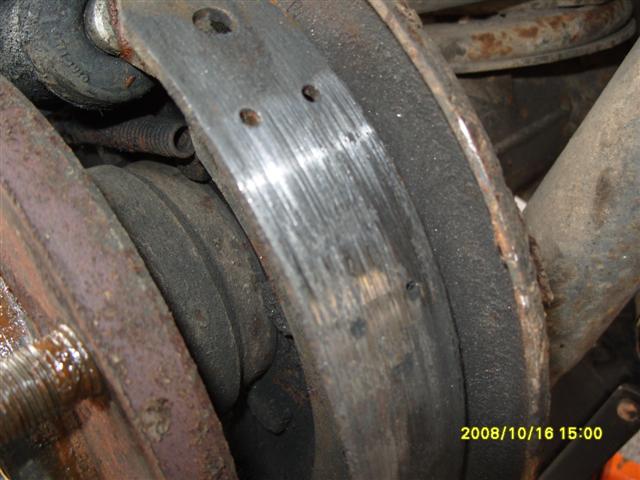 Any time the tires are off the car or whenever you hear or feel anything strange from your brakes, your brakes should be inspected. The best time is when you are having the tires rotated, which should be about every 5-7 thousand miles. This relatively short interval almost always allows you to catch the pads before they wear out completely. Even if the shop that does your tire rotation does not repair brakes, someone there can probably tell you approximately how much life is left on them. Simply ask them to look at your brakes while the wheels are off. Most cars can be checked with almost no effort if the tires are already off, so many shops will not change for such a check.
Warning Signs
Many cars and trucks have a built -in warning system that alerts you about worn brake pads- a device called a warning sensor. The appropriate slang term is "squealer." This squealer makes a high-pitched squeak when the brake pads are about 80-90% worn. The warning sensor is a small metal finger that gets closer and closer to the rotor as the brake pads wear thin. When the brake pads are worn out, this finger begins to scrape the rotor as the car rolls. This causes an annoying squeak which is similar to that of fingers on a chalkboard. A warning sensor squeal will usually stop when you apply your brakes. The squealer will not damage the rotor but it may sound like it is. When the squeak begins, Denver mechanic pros suggest you need to get new brake pads right away.
Subscribe to:
Posts (Atom)