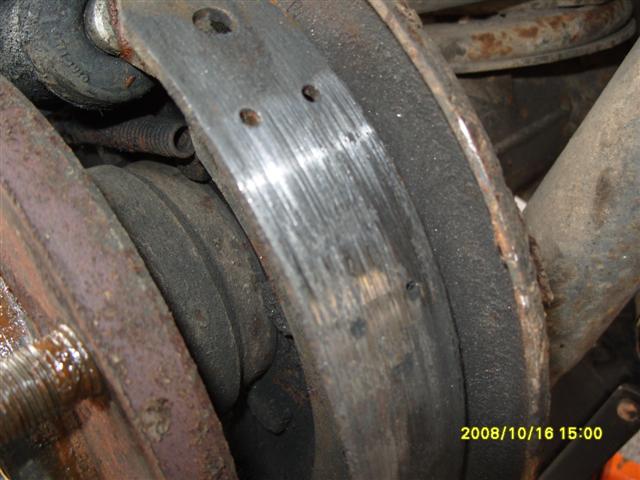
 Any time the tires are off the car or whenever you hear or feel anything strange from your brakes, your brakes should be inspected. The best time is when you are having the tires rotated, which should be about every 5-7 thousand miles. This relatively short interval almost always allows you to catch the pads before they wear out completely. Even if the shop that does your tire rotation does not repair brakes, someone there can probably tell you approximately how much life is left on them. Simply ask them to look at your brakes while the wheels are off. Most cars can be checked with almost no effort if the tires are already off, so many shops will not change for such a check.
Warning Signs
Many cars and trucks have a built -in warning system that alerts you about worn brake pads- a device called a warning sensor. The appropriate slang term is "squealer." This squealer makes a high-pitched squeak when the brake pads are about 80-90% worn. The warning sensor is a small metal finger that gets closer and closer to the rotor as the brake pads wear thin. When the brake pads are worn out, this finger begins to scrape the rotor as the car rolls. This causes an annoying squeak which is similar to that of fingers on a chalkboard. A warning sensor squeal will usually stop when you apply your brakes. The squealer will not damage the rotor but it may sound like it is. When the squeak begins, Denver mechanic pros suggest you need to get new brake pads right away.
