Showing posts with label brakes. Show all posts

Tuesday

Why Do Brakes Squeal And How To Fix Them

Noisy brakes are not only annoying, they can also be a sign of ineffective stopping power which is
dangerous for you and others on the road. It is important to note that not all noise made by your brakes means they are failing, from time to time your breaks will make some noise.

What Makes Brakes Squeal?

Denver brake repair experts say, modern braking systems use a cast-iron disc that is squeezed between two brake pads which are lined with friction material. The disc, pads and caliper can at times begin to vibrate which causes the system to give off a high frequency noise. The noise that is produced depends on how hard you press down on the pedal. Some brake systems are more prone to squealing than others, so it is important to research the brakes you are recommended before having them installed. If you find your brakes to be too noisy, or suspect a problem with your brakes, bring your vehicle into a mechanic. Mechanics can dampen the noise, change the resonant frequency of the arrangement, or replace your brakes.

The Fix(es)
  • Check for loose parts. 
  • Replace shims or clips that are loose or damaged.
  • Try applying a dampening paste. 
  • Replace worn brake pads. 
  • Change out the brake pad to one made with a different material. 
  • Check the brake rotor or drum for scoring and other wear. 
  • Have the rotors resurfaced if their wear is not too deep.
  • Replace the rotors or drums.

Monday

Replacing your Brake Pads - Shoes

On disk brakes on a vehicle, the pads rub against the brake rotors. A brake pad consists of a friction material area about a half inch thick.  The friction material and the backing plate are permanently bonded together to forma brake pad. Two brake pads are used per wheel. The friction material is made of a softer material that rubs against the hard metal rotor create the friction that stops the car.  Most brake pads manufactured today contain a small amount of tiny metal particles within the friction material and ultimately last longer.  Every time the brake pads are used a small amount of the friction material is warn off.  The more you use your brakes, the more your pads will wear down and eventually wear out. 

Replacing your Pads & Shoes
Since brake pads are designed to wear out, they are designed to be replaced relatively easy.  During the time you own your car, you will most likely have to replace either your brake pads or shoes as some point.  The best time to replace the pads is just before all the friction material is worn off. If pads are left on the vehicle until there is no friction material left, the metal backing plate will grind into the rotar and quickly destroy it. This will add a significant amount on your repair bill so you do NOT want to wait!

When to Have Your Brake Pads Inspected

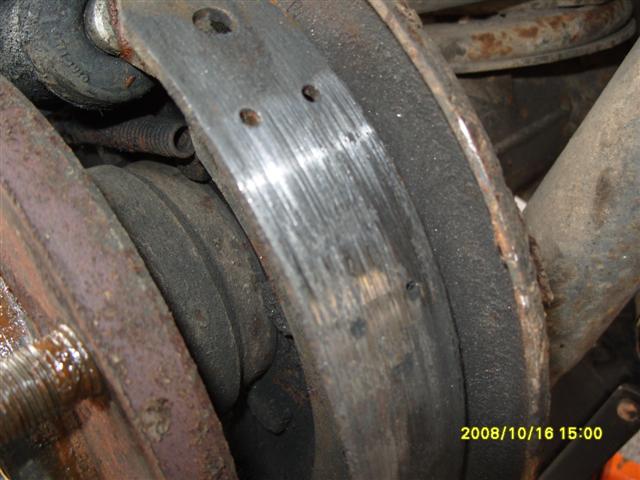
Brake shoes are similar to brake pads and are designed to wear out. They are pressed against the inside of the brake drums to stop the car. Shoes are used only with drum brakes and are found only on the rear of modern cars. Many cars do not use drum brakes at all; these cars have disk brakes on the front and the rear. There are two brake shoes per rear wheel.

Any time the tires are off the car or whenever you hear or feel anything strange from your brakes, your brakes should be inspected. The best time is when you are having the tires rotated, which should be about every 5-7 thousand miles. This relatively short interval almost always allows you to catch the pads before they wear out completely. Even if the shop that does your tire rotation does not repair brakes, someone there can probably tell you approximately how much life is left on them. Simply ask them to look at your brakes while the wheels are off. Most cars can be checked with almost no effort if the tires are already off, so many shops will not change for such a check.

Warning Signs
Many cars and trucks have a built -in warning system that alerts you about worn brake pads- a device called a warning sensor. The appropriate slang term is "squealer." This squealer makes a high-pitched squeak when the brake pads are about 80-90% worn. The warning sensor is a small metal finger that gets closer and closer to the rotor as the brake pads wear thin. When the brake pads are worn out, this finger begins to scrape the rotor as the car rolls. This causes an annoying squeak which is similar to that of fingers on a chalkboard. A warning sensor squeal will usually stop when you apply your brakes. The squealer will not damage the rotor but it may sound like it is. When the squeak begins, Denver mechanic pros suggest you need to get new brake pads right away.